
Turn Audiences Into Active Communities: The Collaborative Challenge Blueprint
The harsh reality of community building: 90% of your members are lurkers. They watch, they scroll, but they never engage. This "90-9-1 rule" has plagued community managers for decades—90% lurk, 9% occasionally participate, and only 1% actively create content.
But here's what changed in 2024: brands discovered that the solution wasn't better content or more incentives. It was collaborative challenges—team-based experiences that turn individual observers into collective participants.
The numbers tell the story. While traditional communities struggle with 80-90% lurker rates, brands using collaborative challenge frameworks are seeing engagement rates of 73% and higher. The difference? They stopped treating communities as audiences to broadcast at, and started building experiences people do together.
the economic crisis behind the 90-9-1 problem
Community engagement isn't just a vanity metric—it's a survival issue. Customer acquisition costs have increased 60-75% across paid channels over the past five years, making organic community growth not just nice to have, but economically essential.
Here's the calculation that keeps marketers up at night:
- Paid channel CAC: Up 60-75% and climbing
- Referral CAC: 10-29% lower than paid channels
- Referred customer LTV: 16% higher than paid acquisitions
- Conversion rate: Referred customers are 4x more likely to convert
The math is brutal: if you can't activate your existing community members, you're bleeding budget through expensive acquisition channels while sitting on an untapped goldmine of potential advocates.
And the problem is worsening. 55% of community managers report that engagement difficulty is their primary challenge. Brand marketers know this—70% now prioritize retention over acquisition, recognizing that engaged community members drive sustainable growth.
what successful brands discovered about activation
Let's examine what actually works. These aren't theoretical frameworks—they're real case studies with documented results.
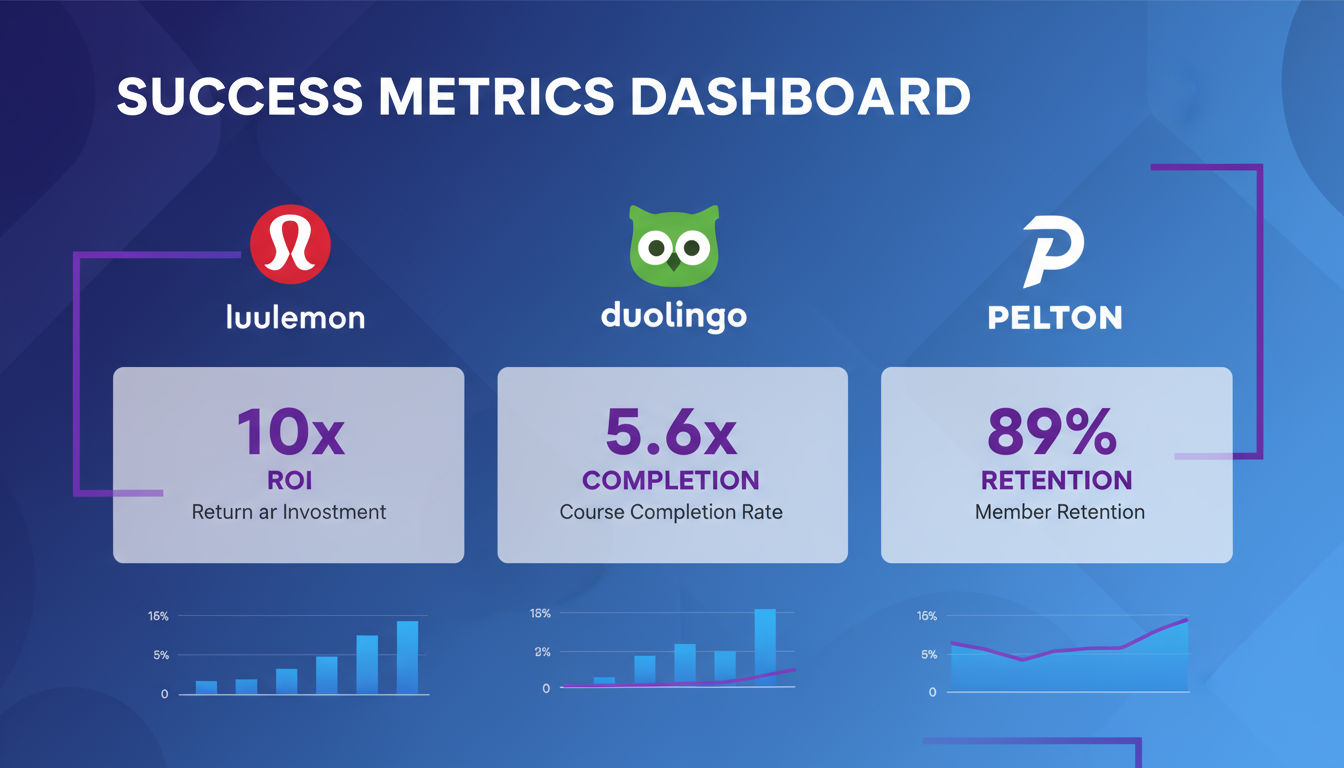
Lululemon x Strava: the 10x ROI challenge
Lululemon's "Further" challenge on Strava brought together 220,000 participants across 180 countries to collectively run, walk, and cycle their way toward shared goals. The results:
- 10x return on investment
- 9.7 million kilometers logged collectively
- Team-based relay format drove sustained participation
- Transformed product launch into global movement
The key insight? Participants weren't just tracking individual workouts—they were contributing to team milestones. The psychological shift from "my run" to "our progress" changed everything.
Duolingo friend quests: 5.6x higher completion
Duolingo introduced collaborative learning quests where friends work together toward shared language learning goals. The impact was immediate:
- 5.6x higher completion rates versus solo challenges
- 22% increase in daily lessons completed
- Persistent engagement long after quest completion
The breakthrough wasn't better content or bigger rewards. It was the simple addition of "we're doing this together."
Peloton teams: 89% retention through collective achievement
Peloton's team-based challenges didn't just improve engagement—they fundamentally changed retention economics:
- 89% retention rate for team challenge participants
- 60% lower churn compared to solo riders
- Cross-sell increase as team members tried new workout types together
The pattern emerging across these case studies is clear: collaborative challenges transform community dynamics from broadcast to dialogue, from passive consumption to active participation.
the psychology behind collaborative engagement
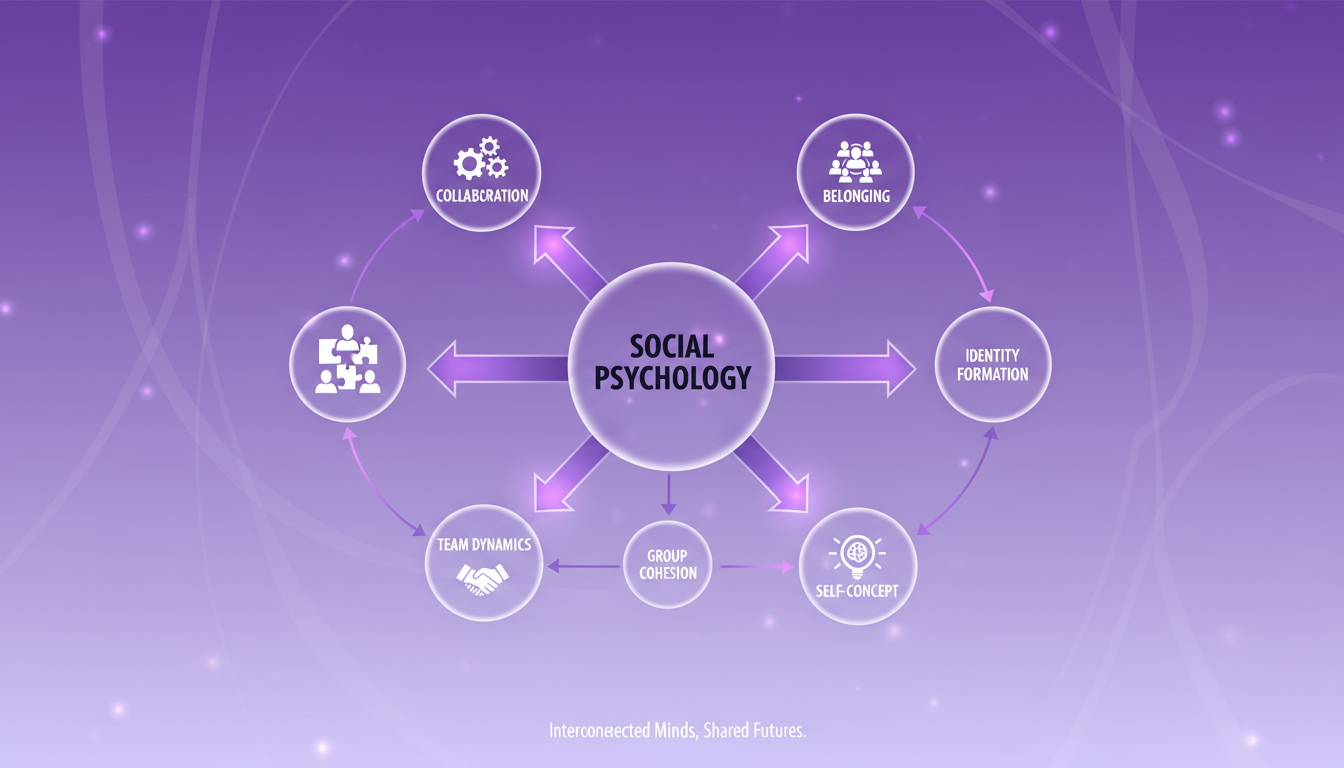
Why do collaborative challenges work when traditional community tactics fail? The answer lies in behavioral psychology and social dynamics.
Social accountability creates commitment. When you're part of a team working toward a shared goal, your participation matters to others. The psychological cost of letting down your team is significantly higher than abandoning a personal goal.
Collective efficacy amplifies motivation. Research shows that groups working toward shared objectives experience 73% improved performance compared to individual efforts. The belief that "we can achieve this together" is more powerful than "I can do this alone."
Identity formation through collaboration. Team challenges don't just drive activity—they create belonging. Members shift from "I follow this brand" to "I'm part of this community." This identity shift is the difference between passive audiences and active communities.
The data backs this up. Communities built around collaborative experiences see 215% higher growth rates than broadcast-focused communities. Why? Because members become advocates, not just consumers.
Modern community infrastructure should reflect these behavioral insights. Purpose-built community engagement tools now integrate team challenges, collaborative goals, and social recognition systems that activate these psychological principles at scale.
the white space opportunity: what's missing in community tech
Here's where the market gets interesting. We analyzed every major community platform—Circle, Discord, Slack, Mighty Networks, Tribe—looking for robust team-based collaborative challenge features.
Result: Zero major platforms offer comprehensive collaborative challenge infrastructure.
This represents a massive white space opportunity. Community managers know engagement is their top challenge. They see the case studies proving collaborative challenges work. But the tools don't exist to implement these strategies at scale.
The gap is especially striking given the market dynamics:
- Community management software market: $6-7B today → $23B by 2035 (18.3% CAGR)
- Gamification market: $25.94B projected, 25.4% CAGR
- Creator economy: 50M+ creators, $250B market opportunity
The technology is lagging the strategy. Brands are duct-taping together solutions using spreadsheets, Strava integrations, and manual tracking. Meanwhile, the data proves that proper collaborative challenge infrastructure can deliver 73.2% average engagement rates—dramatically higher than the industry standard of 10-20%.
Building versus buying this capability is the strategic question. For enterprise teams and platforms, gamification engine infrastructure designed specifically for collaborative challenges can compress months of development into days of implementation—and deliver the behavioral psychology layer that generic tools miss.
the collaborative challenge framework: practical implementation
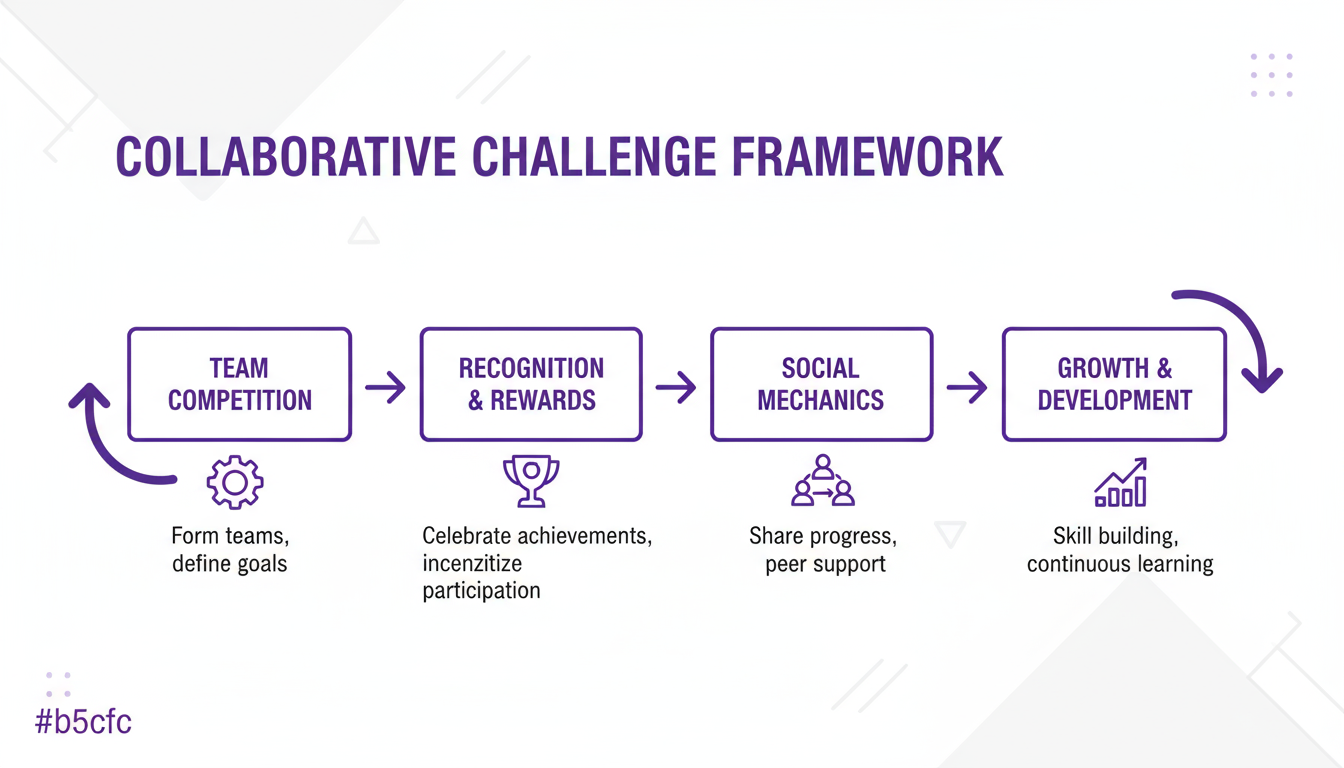
Let's get tactical. Based on analysis of successful implementations, here's the framework that works:
1. Design for Team-Based Competition
Individual challenges activate personal motivation. Team challenges activate social accountability and collective identity.
Structure options that work:
- Relay challenges: Team members contribute sequential progress (like Lululemon's running relay)
- Cumulative goals: Team adds up individual contributions toward shared milestones
- Competitive brackets: Teams compete against each other, not just the challenge
- Role specialization: Different team members contribute different challenge types
The Nike Run Club saw a 22% increase in engagement conversion when they introduced team-based challenge formats alongside individual goals.
2. Implement Dynamic Recognition Systems
Static leaderboards aren't enough. Successful platforms use dynamic recognition that celebrates multiple types of contribution:
- Achievement badges for personal milestones
- Team performance leaderboards updated in real-time
- Contribution visibility so team members see each other's progress
- Milestone celebrations that trigger for both individual and team achievements
Sephora's Beauty Insider program uses this multi-layered recognition approach to maintain 40 million active members with a 22% increase in cross-sell through community-driven discovery.
3. Build Social Mechanics Into the Core Experience
Collaborative challenges fail when social features are bolted on. They succeed when social interaction is required for progress.
Essential social mechanics:
- Team formation tools that make it easy to join or create groups
- Progress sharing that's automatic, not manual
- Peer encouragement features (reactions, messages, celebrations)
- Referral programs that reward community growth (more on this below)
Salesforce's Trailblazer community built around collaborative badge earning now engages hundreds of thousands of users who help each other learn through shared challenges.
4. Layer in Member-Driven Growth Mechanics
The most successful community strategies combine engagement with acquisition. Referral programs integrated into collaborative challenges create network effects:
- 3-5x higher conversion rates versus paid channels
- 16% higher lifetime value for referred members
- 10-29% lower CAC compared to traditional acquisition
PayPal's referral economics prove the model: $23.12 less per customer acquisition through member referrals, with a 10% overall CAC reduction at scale.
The key is making referrals natural, not forced. When team challenges require a certain number of members, or when bringing friends increases team performance, referrals become part of the game mechanics rather than a separate ask.
measuring success: beyond vanity metrics
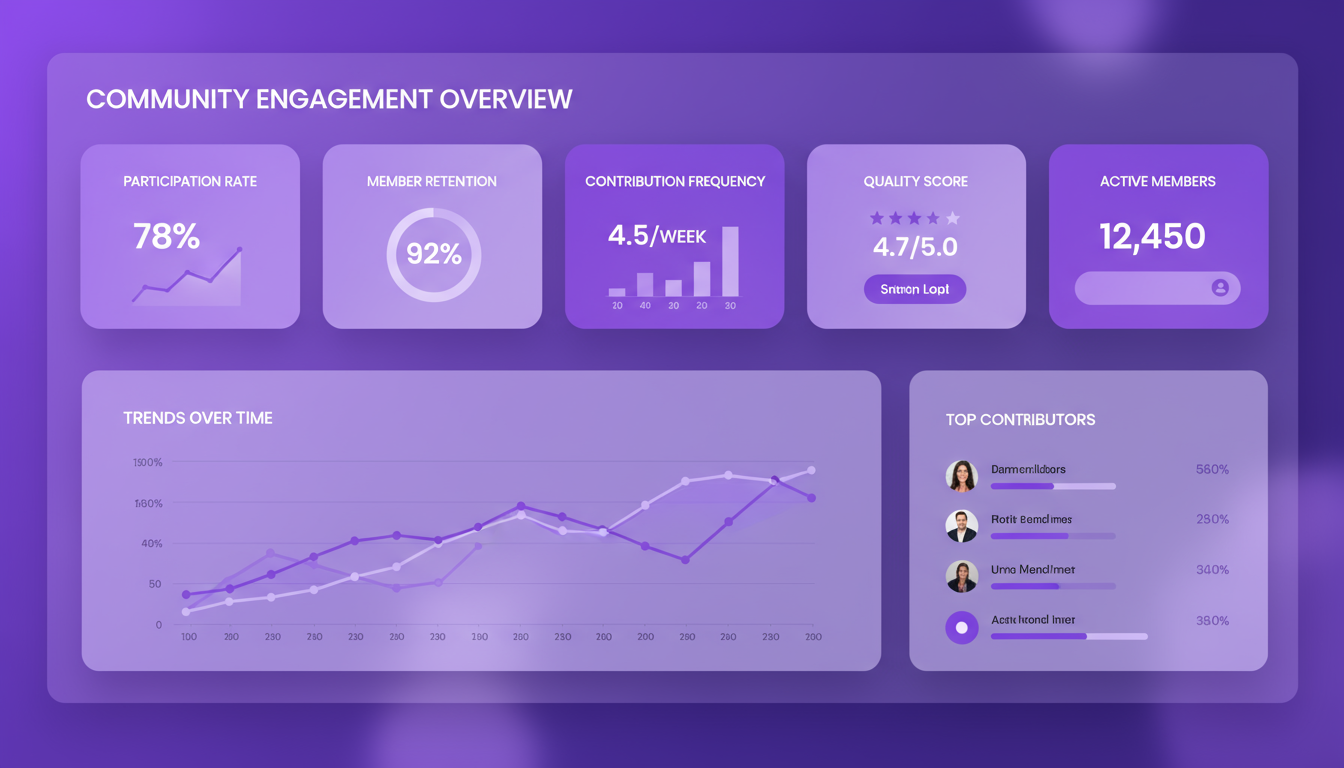
How do you know if your collaborative challenge strategy is working? Look beyond participation counts to these meaningful metrics:
Engagement depth:
- Active participation rate: Target 50%+ (versus industry standard 10-20%)
- Repeat participation: Challenge-over-challenge return rate
- Cross-feature adoption: Do challenge participants use other community features?
Community health:
- 90-9-1 ratio shift: Track movement from lurkers to contributors
- Member-generated content: Volume and quality of peer interaction
- Retention curves: Compare challenge participants to non-participants
Business impact:
- Referral rate: Percentage of members inviting others
- CAC reduction: Measure against paid channel benchmarks
- LTV increase: Compare engaged community members to average customers
Peloton's 89% retention rate for team challenge participants versus their baseline demonstrates the business impact of getting these metrics right.
real-World implementation: what It takes
Let's be honest about what implementing collaborative challenges requires:
Technical infrastructure:
- Challenge creation and management system
- Team formation and management tools
- Real-time progress tracking and leaderboards
- Achievement and badge systems
- Social features (messaging, sharing, reactions)
- Referral program mechanics
- Analytics and reporting
Operational requirements:
- Community manager to design and launch challenges
- Content strategy for challenge themes and cadence
- Moderation for team interactions
- Performance monitoring and optimization
- Member support for technical issues
Build vs. Buy decision:
Building in-house typically requires 3-6 months of development plus ongoing maintenance. For organizations where community is core to the business model, this investment makes sense.
For brands looking to activate existing audiences or test collaborative strategies, purpose-built community building infrastructure offers faster time-to-value with proven behavioral psychology built in.
The Adobe Creative community—serving 165 million creators—demonstrates the scale possible when collaborative challenge infrastructure meets community strategy.
the activation playbook: your 90-Day plan
Ready to transform your audience into an active community? Here's the tactical 90-day playbook:
days 1-30: foundation
Week 1-2: Audit and Strategy
- Analyze current engagement metrics (establish baseline)
- Identify your most engaged members (potential team leaders)
- Survey community for interests and pain points
- Define success metrics and goals
Week 3-4: Infrastructure Setup
- Implement or integrate collaborative challenge platform
- Create team formation process
- Design recognition and reward systems
- Test technical functionality
days 31-60: launch and iterate
Week 5-6: Soft Launch
- Launch first challenge with small group of engaged members
- Focus on team-based format with clear shared goals
- Monitor participation and gather feedback
- Iterate based on early results
Week 7-8: Scale and Optimize
- Open challenge to broader community
- Activate referral mechanics (team members invite friends)
- Celebrate early wins and share progress publicly
- Optimize based on engagement data
days 61-90: sustained engagement
Week 9-10: Challenge Cadence
- Launch second challenge building on learnings
- Introduce variety (different challenge types, team sizes)
- Implement automated recognition systems
- Measure retention and repeat participation
Week 11-12: Business Impact Assessment
- Measure movement in 90-9-1 ratios
- Calculate CAC impact from referrals
- Assess LTV differences for engaged members
- Plan Q2 challenge calendar and expansion
The brands achieving 150% engagement increases aren't doing anything magical—they're systematically implementing collaborative challenge frameworks and measuring what works.
the Micro-Community advantage
One final insight from the research: micro-communities outperform mass communities for engagement. The data shows that smaller, purpose-driven groups have 87% higher engagement than large, general communities.
This doesn't mean you need to keep communities small. It means you need to create small group experiences within large communities.
Collaborative challenges naturally create micro-communities through team formation. A community of 10,000 becomes 200 teams of 50, each with strong internal bonds and shared goals.
This structure solves the scale problem that's plagued community builders. You can grow community size without diluting engagement quality. Each new member joins a small team, experiences immediate belonging, and contributes to collective goals.
from broadcast to belonging: the fundamental shift
The evolution from audience to community isn't about better content or more frequent posting. It's about fundamentally redesigning the relationship between brand and member.
Old model: Brand broadcasts → Audience consumes → Some percentage engages
New model: Brand creates shared challenges → Teams form → Members collaborate → Community self-sustains
The 90-9-1 problem isn't unsolvable. It's a symptom of broadcast-era thinking applied to community-era dynamics. The brands breaking through—Lululemon's 10x ROI, Duolingo's 5.6x completion rates, Peloton's 89% retention—aren't optimizing the old model. They're playing a different game entirely.
The economic pressure is real. CAC increases make community-driven growth non-negotiable. The behavioral psychology is proven. The case studies are compelling. The only question is implementation speed.
take action: transform your audience today
The opportunity window for collaborative community engagement is wide open. With zero major platforms offering comprehensive team-based challenge infrastructure, early movers can establish category leadership.
Whether you're a community manager fighting the 90-9-1 crisis, a brand marketer seeking lower CAC, or a creator building your platform, the collaborative challenge framework offers a proven path from passive audience to active community.
The brands winning in 2025 won't be those with the largest audiences. They'll be those with the most engaged communities—members who collaborate, contribute, and champion the brand because they're part of something bigger than consumption.
Ready to activate your community with collaborative challenges? Explore how purpose-built engagement infrastructure can help you implement team-based challenges, dynamic recognition systems, and referral mechanics that transform lurkers into leaders—or see the platform in action to understand how 73.2% engagement rates become achievable.
The shift from audience to community starts with a single collaborative challenge. What will yours be?